Sewing: Sleeve setting and Zone of Proximal Development
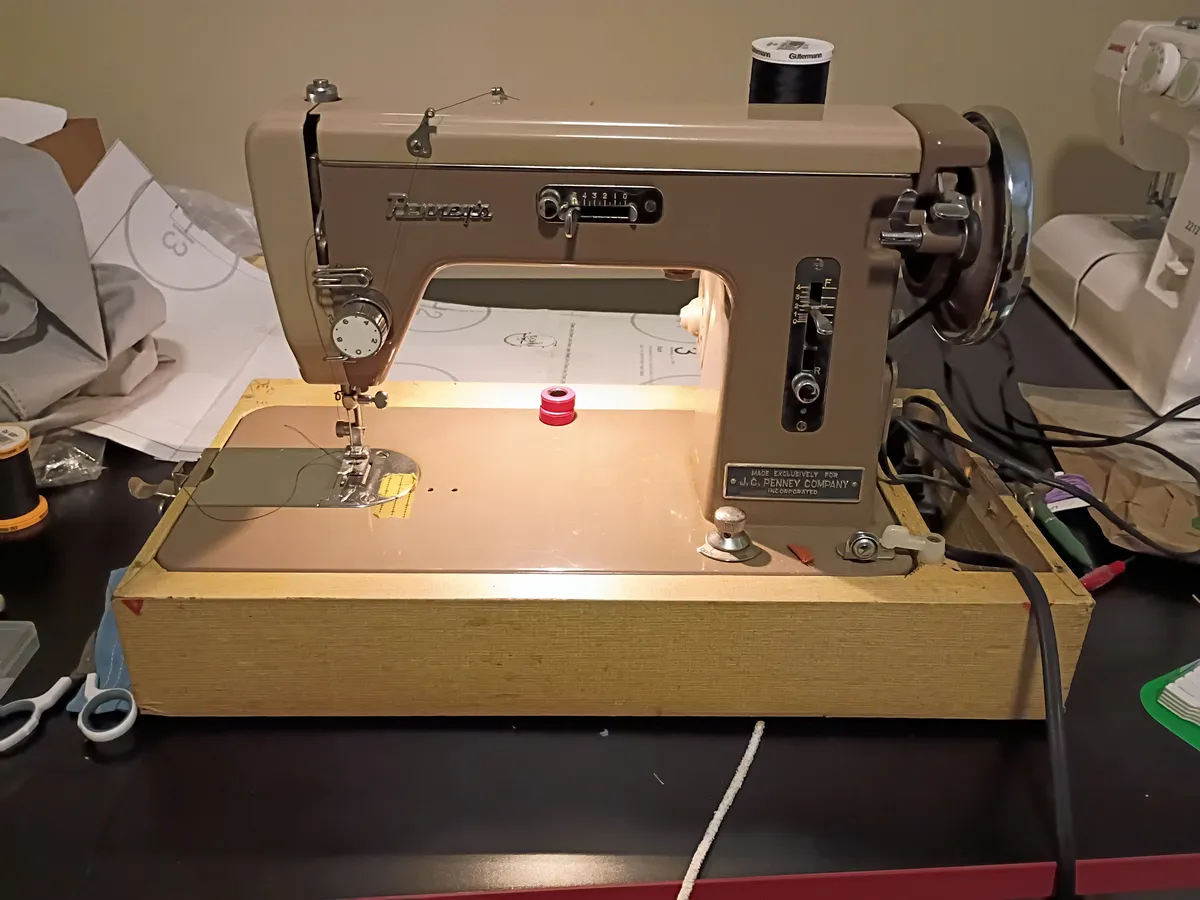
It's been a rough couple of weeks on the sewing front. While working on what was supposed to be an easy side project, my sewing machine stopped completing zig-zag stitches. We pulled out this old J. C. Penny from my mom-in-law from the closet. It does zig-zag but drops straight stitches using some thread types.
This is mixed with what might be the most frustrating challenge of my sewing journey, the set-in sleeve that the Simon was designed around. It's a neat trick if done right but I'm at the point of accepting that the Simon version is beyond my skill.
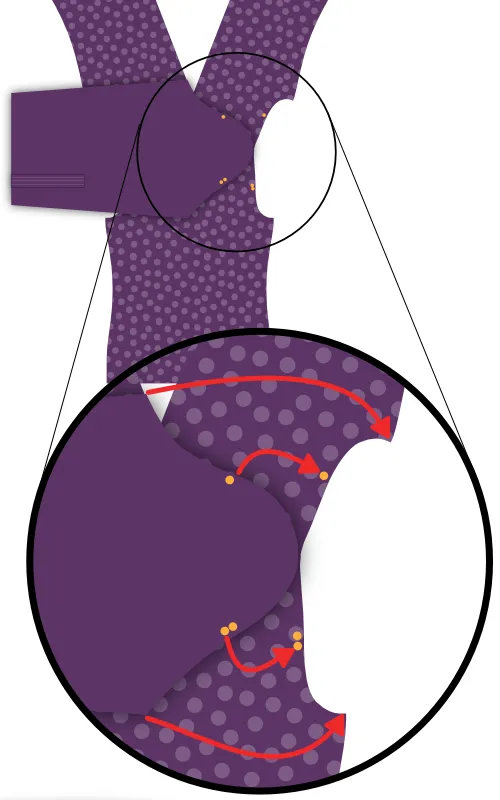
Source: Freesewing
Some of the sources of frustration include:
- The seam is convex on the sleeve side and concave on the body side. This means that seam allowances are of slightly different sizes.
- I find it difficult to manage tension between two different layers on the machine bed.
- Specifications to flat fell the seams using topstitching include different seam allowances which makes getting the pieces lined up even more difficult.
- The machine bed hides one side of the process from me.
- I'm having mechanical difficulties and I feel like I'm fighting fabric which wasn't originally designed for shirting.
I'm finally at a point where I can join the sleeve with minimal errors, but felling has become a blocker. But do I need to fell...
My favorite shirt is a made-to-measure (no longer available) mail-order shirt that doesn't do flat felling. Switching to a seam finish I'm more comfortable with will allow me to produce a wearable item, and I can tackle the felling at a later time.
The ZPG
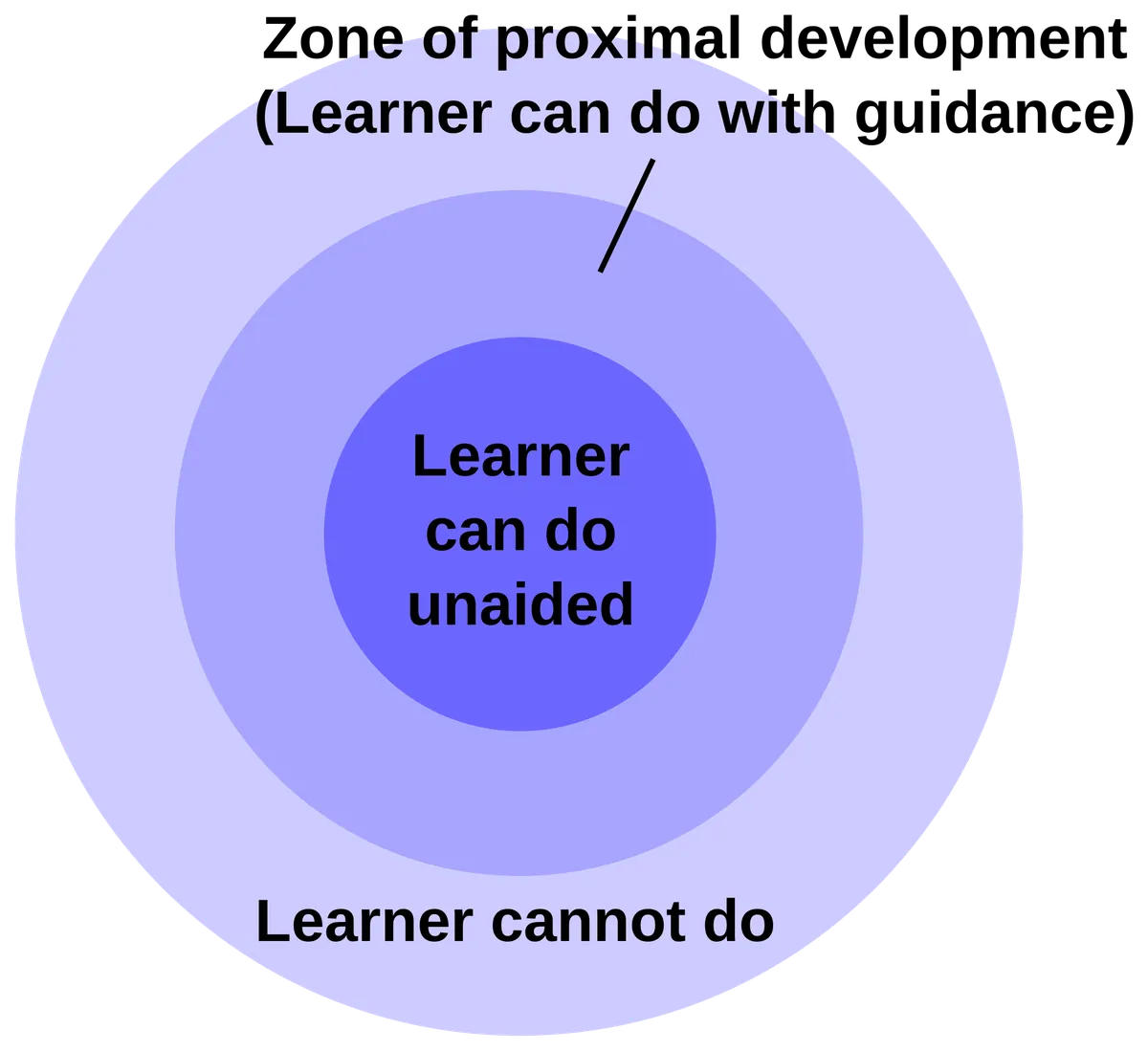
Wikimedia commons, public domain.
The zone of proximal development is an area of learning that occurs when a person is assisted by a teacher or peer with a higher skill set.[1] The person learning the skill set cannot complete it without the assistance of the teacher or peer. The teacher then helps the student attain the skill the student is trying to master, until the teacher is no longer needed for that task.[11] — Wikipedia
Scaffolding can include process modification, tools, and guides as well as direct tutoring from a teacher or peer.
Simplifying the sleeve allows me to focus on the skills I need now and tackle the challenge of felling on possibly an easier seam type. And part of the frustration is that it's been 7 months and I'm still not close to having a wearable example. Granted a lot has happened in that period, but still, the lack of progress is frustrating.
Is this What I Want?

Something else that's been on my mind, is a direct clone of a men's shirt really what I want from queer sewing? I've fallen back to the Simon after additional frustration getting the bust darts on the Simone to work. Do I really need to use machine felling and topstitching because that's standard for a men's shirt when I'm making a conscious decision to be more honest in my presentation.
The Simon is a first step to future designs. And understanding how shirts work and the pain points in making them are part of the process. I might try to hybridize Simon with the underarm gusset from older shirt designs.
And once I get this shirt pattern down, I can try cloning my favorite.